




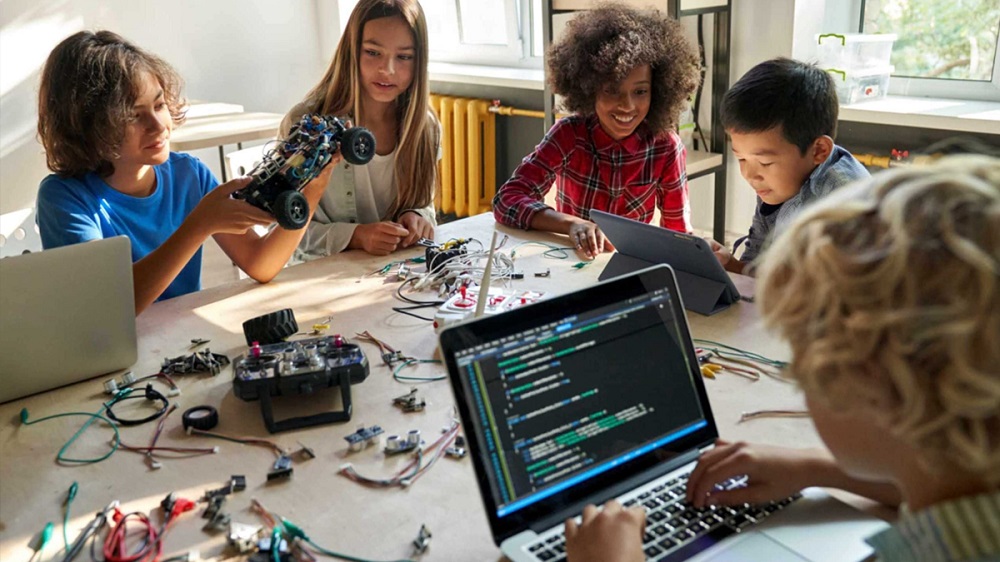
The global landscape is undergoing a profound transformation driven by rapid technological advancements, evolving workforce demands, and complex societal challenges. As automation, artificial intelligence, and data-driven systems become deeply integrated into daily operations, the baseline requirements for professional success are shifting. Traditional educational models that rely heavily on rote memorization and isolated subject comprehension are no longer sufficient to prepare the next generation for this dynamic environment.
In response to these shifting realities, Science, Technology, Engineering, and Mathematics education has emerged as a cornerstone of modern learning. Rather than treating these four disciplines as separate, independent courses, contemporary frameworks integrate them into a cohesive, hands-on learning paradigm. By shifting the academic focus from passive content absorption to active, real-world application, this educational approach equips students with the exact cognitive frameworks, technical literacies, and adaptive skills required to thrive in the modern world.
Fostering Advanced Critical Thinking and Real-World Problem Solving
At the heart of the educational framework is a dedication to developing higher-order cognitive skills. In a traditional classroom setting, students are frequently presented with structured problems that possess a single, predefined correct answer. While this methodology helps validate foundational calculations, it fails to replicate the ambiguous, open-ended challenges that professionals encounter in the workplace.
Integrated technical learning dismantles this rigid dynamic by introducing project-based scenarios that closely mirror authentic global issues. For instance, students might be tasked with analyzing the environmental degradation of a local waterway, designing a functional filtration system using constrained physical materials, using data processing software to track water quality improvements, and calculating the long-term ecological impact.
Through this exploratory process, learners acquire a series of critical cognitive advantages:
-
Hypothesis Testing and Verification: Students learn to formulate distinct theories, design structured experiments to test their ideas, and objectively evaluate the resulting empirical data.
-
Algorithmic and Systems Thinking: By engaging with complex operational systems, individuals learn to break down overwhelming problems into smaller, manageable components, mapping out how separate variables interact within a broader framework.
-
Evidence-Based Reasoning: Learners develop the habit of anchoring their arguments and conclusions in verifiable metrics rather than relying on subjective intuition or unverified assumptions.
This continuous practice of analyzing, iterating, and validating prepares individuals to confront modern occupational challenges with confidence and methodical precision.
Cultivating Adaptability and a Growth Mindset Through Iterative Design
The modern professional ecosystem rewards those who can rapidly pivot in response to unexpected disruptions or structural changes. Because technological applications evolve at an unprecedented pace, technical knowledge can quickly become obsolete. Consequently, the capacity to learn, unlearn, and relearn is arguably the most vital asset a future worker can possess.
The engineering design process inherent in technical curricula naturally builds this cognitive flexibility. When students collaborate to build a robotic mechanism or program a software application, their initial prototypes rarely function perfectly. A line of code may contain logic flaws, or a structural joint might buckle under physical stress.
Rather than viewing these instances as academic failures or indicators of intellectual limitation, the curriculum reframes these moments as necessary, informative data points within the standard development cycle. Students learn to isolate the specific point of failure, research alternative solutions, modify their design, and test the mechanism once again. This repetitive loop strips away the fear of making mistakes, replacing it with deep resilience and a lifelong growth mindset. Individuals emerge from this training understanding that expertise is not a fixed trait, but an adaptable capability developed through persistent iteration and analytical reflection.
Bridging the Digital Literacy and Technical Skill Gap
The global workforce is facing an accelerating demand for specialized technical competencies. Sectors such as renewable energy production, biotechnology, automated manufacturing, and cloud computing architecture are expanding rapidly, yet organizations frequently struggle to secure qualified personnel to fill these high-value roles. Early and consistent exposure to robust technical education directly addresses this talent deficit.
Modern instructional design ensures that students do not merely act as passive consumers of modern digital interfaces; they learn to become the active architects behind them. By embedding core computer science and data literacy guidelines into early educational milestones, schools demystify the internal mechanics of modern technology.
-
Software Development and Coding Foundations: Students learn the syntax and logic structures of programming languages, transforming abstract ideas into functional software tools, mobile applications, and web platforms.
-
Data Analysis and Visualization: Learners practice gathering massive data arrays, filtering out statistical noise, and utilizing digital visualization dashboards to communicate complex trends clearly to diverse audiences.
-
Frontier Technology Exposure: Advanced learning laboratories provide early exposure to specialized concepts like machine learning integration, computer numerical control fabrication, and automated robotics systems.
This rigorous technical preparation ensures that as graduates enter the professional arena, they possess the baseline operational literacies required to interface seamlessly with sophisticated industrial frameworks from day one.
Enhancing Collaborative Communication and Team Dynamics
A common misconception is that technical study is a solitary pursuit confined to computer monitors and isolated laboratory benches. In reality, modern scientific and technological breakthroughs are rarely the result of a single individual working in total isolation. The scale and complexity of contemporary global challenges require seamless, interdisciplinary collaboration across diverse corporate networks.
To reflect this professional reality, modern technical modules are structured around group dynamics and shared accountability. Students are organized into diverse project teams, forcing them to navigate the natural friction that arises when distinct perspectives clash. A single project might require a student focusing on mathematical modeling to communicate seamlessly with a peer handling structural engineering design and another managing the digital control interface.
Through this continuous interpersonal contact, students naturally refine their soft skills. They learn to articulate abstract technical concepts in plain, accessible language, listen actively to alternative viewpoints, negotiate internal resource allocations, and build collective consensus around a shared objective. Furthermore, these collaborative group structures teach students how to distribute responsibilities based on individual strengths, manage project timelines effectively, and take mutual responsibility for the final outcome of their efforts.
Preparing for a Rapidly Evolving Economic Future
The financial and professional arguments for robust technical instruction are clear. Statistical employment projections consistently indicate that positions requiring scientific, mathematical, and advanced technological proficiencies will continue to grow at a rate that significantly outpaces traditional occupational sectors. Furthermore, these career paths are historically tied to higher median compensation profiles and enhanced long-term economic stability.
However, the true value of this educational model extends far beyond preparing students for a specific set of current job openings. By infusing the core principles of science, technology, engineering, and math across the entire developmental journey, educators are preparing students for jobs that have not yet been invented, to utilize technologies that have not yet been designed, in order to solve societal problems that have not yet materialized. Ultimately, this comprehensive educational framework builds a highly versatile, resilient, and forward-thinking generation capable of actively shaping the future of global society.
Frequently Asked Questions
How does early exposure to technical education benefit students who do not plan to enter a scientific career?
The cognitive advantages gained through integrated technical education extend far beyond traditional scientific sectors. The foundational habits of critical analysis, objective data interpretation, structural organization, and iterative problem solving are universally applicable. Whether an individual ultimately pursues a career in corporate law, creative writing, artistic design, or public administration, the capacity to dissect complex problems methodically and collaborate effectively in teams remains a powerful competitive advantage.
What strategies can educational institutions use to implement project-based learning on a restricted budget?
Implementing impactful, hands-on learning experiences does not require expensive high-tech equipment or high-end laboratory spaces. Educational systems can foster powerful problem-solving skills by utilizing open-source coding applications, participating in accessible community recycling drives to source physical modeling materials, and focusing on localized environmental or structural challenges that students can analyze using basic observation and standard software tools.
In what ways does this integrated approach specifically help close traditional demographic gaps in the workforce?
By standardizing hands-on, exploratory learning across the core curriculum from an early age, schools ensure that all students, regardless of socioeconomic background or gender, receive equal exposure to technical concepts. This universal accessibility helps dismantle historical stereotypes, fosters early personal confidence, and encourages underrepresented groups to discover natural aptitudes that inspire them to pursue advanced degrees and high-paying professional paths.
How can teachers balance the demands of standardized testing with the open-ended nature of project-based study?
Successful educators integrate standardized testing benchmarks directly into active, project-based learning frameworks rather than treating them as separate academic requirements. By using hands-on experiments to illustrate the abstract scientific laws and mathematical equations featured on standardized assessments, teachers help students build a deeper contextual memory that improves overall test performance while preserving the creative freedom of open-ended exploration.
What is the ideal age to introduce children to foundational computational thinking?
Foundational concepts of computational thinking can be introduced as early as kindergarten through structured, unplugged activities. Long before they ever sit down in front of a digital screen or type a line of actual code, young learners can practice basic logic loops, algorithmic sequencing, and pattern recognition by engaging in physical sorting exercises, logic puzzles, and structured storytelling games that reward sequential planning.
How does the inclusion of the engineering design process help reduce academic anxiety in young learners?
Traditional testing models often create significant stress by penalizing errors heavily, which can make students risk-averse. The engineering design process removes this pressure by treating mistakes, mechanical failures, and software bugs as normal, expected phases of the learning cycle. When children realize that a broken prototype is simply an opportunity to analyze data and try a different approach, their academic anxiety decreases, replaced by curiosity and intellectual resilience.
