




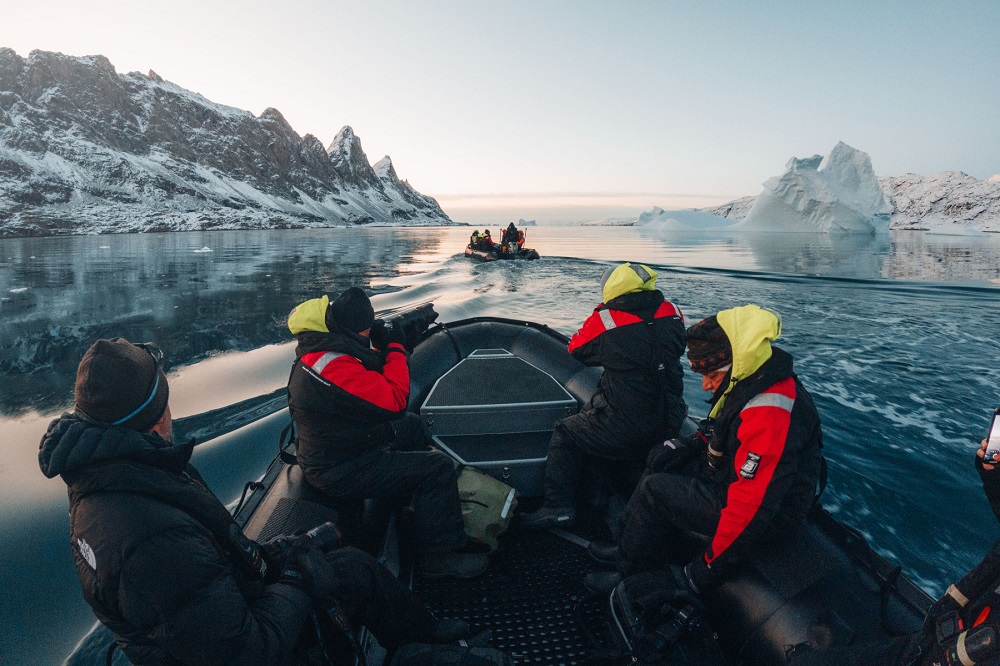
Time has officially surpassed capital as the ultimate modern luxury asset. For a highly successful demographic of corporate executives, tech founders, and high-net-worth entrepreneurs, capital is readily available, but discretionary time is strictly limited. The traditional framework of the multi-week luxury vacation is increasingly incompatible with the relentless operational demands of the modern business landscape.
However, affluent professionals are no longer willing to settle for standard weekend resort getaways or predictable luxury spa retreats. They demand profound, challenging, and bucket-list-worthy travel experiences that can fit into an uncompromising schedule.
This tension between acute time scarcity and a deep desire for raw adventure has fueled the rapid rise of the micro-expedition. A micro-expedition is a highly compressed, ultra-premium travel format that distills the intensity, exclusivity, and isolation of a traditional multi-week scientific or wilderness exploration into a window of just three to seven days.
By combining cutting-edge aviation logistics, private custom charters, and extreme operational efficiency, these journeys allow time-poor individuals to achieve profound personal transformation without leaving their global enterprises unattended for long periods.
Anatomy of a Luxury Micro-Expedition
A standard vacation relies on passive relaxation, whereas a micro-expedition centers on hyper-efficient execution, physical active engagement, and geographic isolation. To compress a major geographical goal into a handful of days, every element of the travel pipeline must be re-engineered.
Private Aviation as a Efficiency Catalyst
The primary barrier to visiting remote global destinations is commercial transit time, including layovers, regional flight schedules, and ground transport delays. Micro-expeditions circumvent this friction through private aviation infrastructure.
-
Point-to-Point Logistics: Utilizing private long-range jets allows travelers to bypass commercial hub congestion entirely. These aircraft fly directly into regional airfields located immediately adjacent to the wilderness destination, saving up to 48 hours of transit time per trip.
-
Helicopter and Seaplane Deployment: Upon landing at a regional airstrip, travelers immediately board waiting private helicopters or bush planes. This secondary aerial leg deposits the expedition party directly into deep interior zones, such as remote mountain peaks, isolated river basins, or untouched arctic fields, within hours of leaving a major metro area.
Private Vessels and Technical Field Infrastructure
Once on-site, accommodations must serve as both a high-end luxury sanctuary and a highly functional basecamp.
-
Expedition Micro-Cruises and Superyachts: In marine environments like the Galápagos, the Norwegian fjords, or the polar perimeters, travelers utilize specialized micro-cruise vessels or private ice-class superyachts chartered exclusively for small groups. These vessels carry advanced navigation equipment, allowing them to access shallow, uncharted bays that massive commercial cruise liners cannot enter.
-
Pop-Up Luxury Outposts: In landlocked environments like the interior deserts of Utah, the Icelandic highlands, or the deep Amazon basin, ground crews construct luxury pop-up camps prior to the guest arrival. These geodesic domes or luxury safari tents feature premium bedding, gourmet culinary setups, and satellite communications, leaving zero environmental footprint behind when dismantled.
Deconstructing the Psychological Drivers
The surging demand for micro-expeditions reflects a deeper shift in the psychology of wealth consumption. The accumulation of physical luxury items has yielded to the pursuit of high-stakes, transformative life experiences.
The Tyranny of Time Scarcity
Affluent professionals live in a state of chronic decision fatigue and hyper-connectivity. For these individuals, a traditional two-week vacation can paradoxically generate more stress due to the sheer volume of unread communications and delayed executive decisions waiting upon their return.
A micro-expedition operates as a surgical strike. It offers a short, high-impact block of total immersion that fits neatly into an extended weekend or a brief corporate holiday window, preventing professional backlogs while fulfilling deep personal ambitions.
The Search for True Disconnection
True mental recovery requires a complete break from routine. The high-adrenaline, physically engaging nature of a micro-expedition forces absolute presence of mind.
When you are ice-climbing a glacier in Svalbard, navigating white-water rapids in a Chilean river basin, or tracking wildlife alongside a world-class biologist, you cannot afford to check corporate emails or review market portfolios. The inherent challenge of the environment demands absolute focus, providing a profound mental reset that passive beach relaxation cannot replicate.
Signature Global Micro-Expedition Formats
The geographical scope of these itineraries is broad, restricted only by the limits of modern aviation speed and logistics. Several distinct micro-expedition archetypes have emerged as favored options among the time-poor wealthy elite.
The Polar Fly-Cruise Hybrid
Traditional voyages to the Antarctic continent require crossing the notoriously turbulent Drake Passage by ship, a process that consumes four full days of round-trip ocean travel. To accommodate time-poor individuals, operators now offer fly-cruise hybrids.
-
The Execution: Travelers board a specialized private charter flight in Punta Arenas, Chile, flying directly over the Drake Passage to land on King George Island in Antarctica in just two hours.
-
The Experience: Upon arrival, guests board an awaiting luxury micro-expedition vessel for four days of intensive zodiac cruising, penguin colony viewing, and iceberg kayaking. A return charter flight brings them back to South America, completing a full Antarctic exploration within a tight six-day window.
Vertical Volcano and Glacier Inversions
Iceland and Greenland serve as prime environments for weekend micro-expeditions due to their geographic proximity to the northeastern United States. Executive teams or private families can leave New York on a Thursday evening and be deep in the Icelandic highlands by Friday morning.
These itineraries leverage private helicopters to drop travelers onto active volcanic craters for interior lava cave explorations, followed immediately by afternoon ice-climbing sessions on sprawling glaciers, compressing months of traditional exploration into a long weekend.
Frequently Asked Questions
How do operators manage the safety risks associated with compressing extreme wilderness expeditions into such short timeframes?
Safety is maintained by pairing high-paying clients with exceptional guide-to-guest ratios, often utilizing retired military operators, elite polar guides, or academic research scientists. Advanced satellite tracking, dedicated medical helicopters on standby, and intensive pre-trip physical evaluations ensure that while the environment remains wild, the actual operational risk is managed with military precision.
Are these highly compressed itineraries environmentally sustainable?
The carbon footprint of utilizing private aviation and custom helicopter charters per capita is undeniably high. To address this, premier micro-expedition operators integrate stringent sustainability protocols. These include purchasing verified blue-carbon offsets, investing in hybrid-propulsion micro-vessels, and strictly adhering to international environmental guidelines such as IAATO and AECO rules to prevent local ecosystem degradation.
Can an individual customize the physical difficulty level of a micro-expedition?
Yes, every micro-expedition is customized to the specific physical capabilities of the private charter group. An itinerary can be dialed up to include extreme vertical mountaineering and backcountry endurance trekking, or dialed down to focus on helicopter-assisted luxury wildlife photography and private estate wine tastings in remote valleys, ensuring accessibility across different age groups.
How far in advance must a high-end micro-expedition be planned and booked?
Because these trips rely on complex logistical components, including private permit acquisition for restricted national parks, custom aircraft scheduling, and deploying advance ground crews, booking typically requires three to six months of lead time. However, select ultra-luxury concierge services maintain rolling assets, allowing them to activate select domestic micro-expeditions in as little as 72 hours for emergency corporate decompression needs.
What is the average group size for these types of travel experiences?
Micro-expeditions are designed around intimacy and agility, meaning group sizes are strictly limited. Private family or corporate bookings typically range from two to eight guests. When operators run scheduled boutique micro-cruises to polar or tropical archipelago regions, passenger capacities are generally capped between twelve and thirty-six guests to eliminate queues for shore landings.
How do travelers handle physical acclimation for high-altitude micro-expeditions?
For destinations involving rapid ascent to high altitudes, such as the mountain regions of Peru or Bhutan, operators employ proactive medical strategies. These include utilizing private cabins equipped with localized hyperbaric oxygen systems, prescribing advanced altitude acclimation pharmaceuticals under medical supervision, and designing the initial 24 hours of the compressed itinerary around minimal physical exertion to ensure safe physiological adaptation.
